

Study Guide: Language Learning with the Sims 4
An bonus blog post for a very bonus game.

Hallo zusammen, for anyone who found this randomly, I’m a language learner using videogames to learn a foreign language (German, in my case) and I’ve been blogging about it to keep me on it.
Usually I do game reviews, but I made a guide for how to get the most out of using Skyrim to study a foreign language and I decided I was going to do the same for the Sims 4. I’m on the fence about how much an educator should recommend the Sims to their pupils, because of some of the content (I know, how prüde of me) and because it’s a freemium game that requires some level of computing power to run safely, but if anyone is doing independent study, I think this guide might help and, well, I might change my mind about getting students to play this game (it’s only PEGI 12) in which case I wouldn’t want to go back and recollect all my thoughts when they’re fresh right now.
Altogether I came up with six study activities for Sims-assisted language learning, which I’ve roughly grouped in three categories with two activities each. The categories are based on how efficiently the activity could be used by individuals or educators teaching themselves or their students and if it would require an educator to make their students download and play the game too, but really all but one of them could be use in a self-study language practice if a student was dedicated enough.
Also I haven’t actually done any of these the way I did the activities in my Skyrim leaning guide, because I’m a little Sims out, but if anyone does take these tasks on, either for themselves or their students, feel free to reach and I can share how effective or ineffective they were.
Activity for independent study: Create a Sim
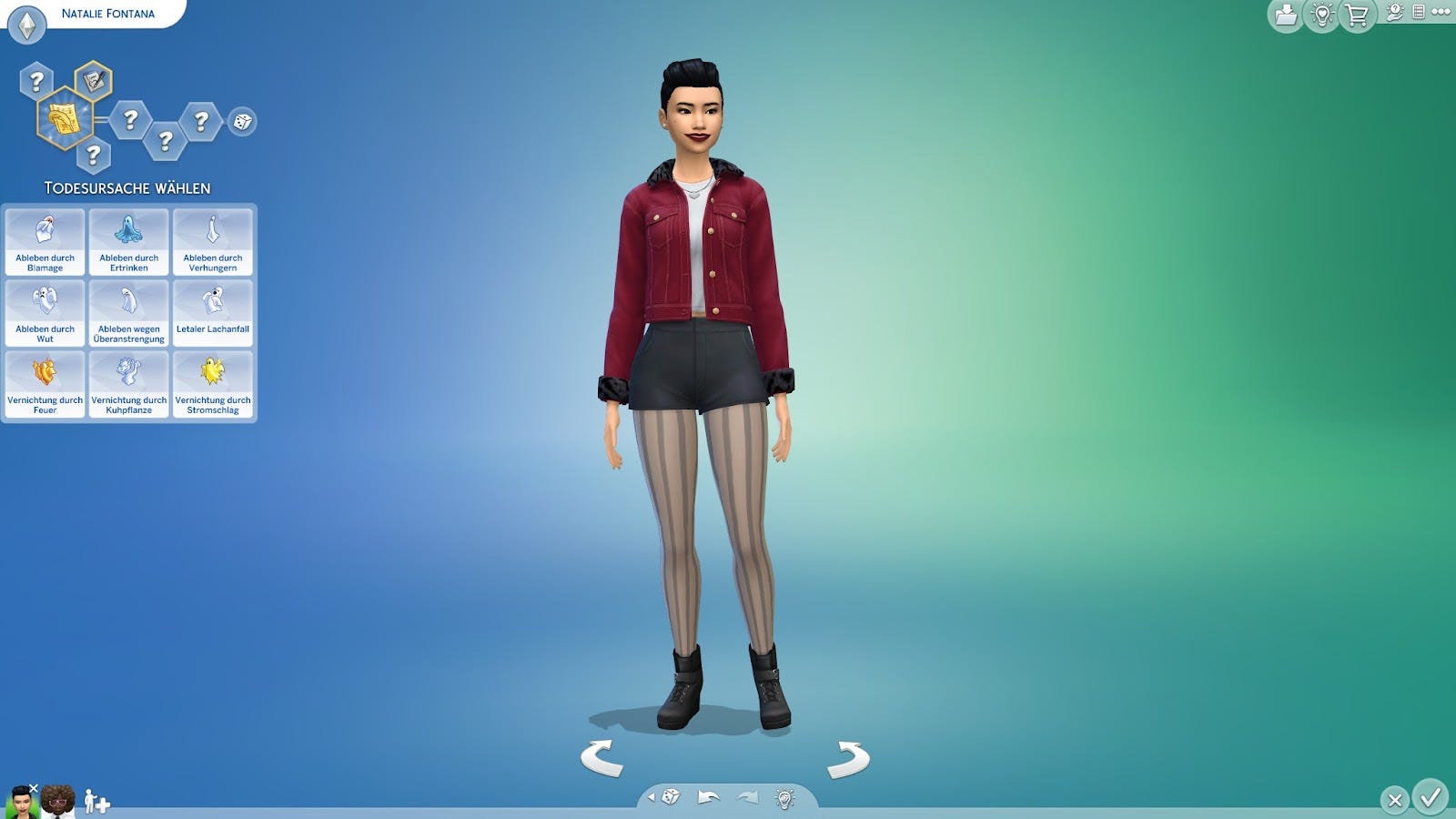
Okay, so yes, this is literally just the first step to playing the game, but there’s a lot of learning to be mined here especially for A1 and A2 students in particular, so I thought I’d give it flowers as its own study activity. Students can either recreate themselves or their loved ones, create a fictional Sim based off whatever they want or complete Emily’s questions to end up a snobbish wannabe astronaut, all of which require reading comprehension. Additionally, students can go through and add their likes, dislikes and fears which is rife for stealing by A1 language teachers. To me, that’s a very simple homework worksheet that EA has very kindly invested money making art for and no teacher should feel guilty for using, especially since the game is free and EA has already made over $1 billion dollars on it.
Also when I played, you could make your starting Sim a ghost and choose their cause of death (oof, dark), though I believe that’s just because the game was promoting a death-ish DLC when I did my language study (Leben & Tod, which I did not buy, because that button is not worth $40).
Activity for independent study: Upgrade Game
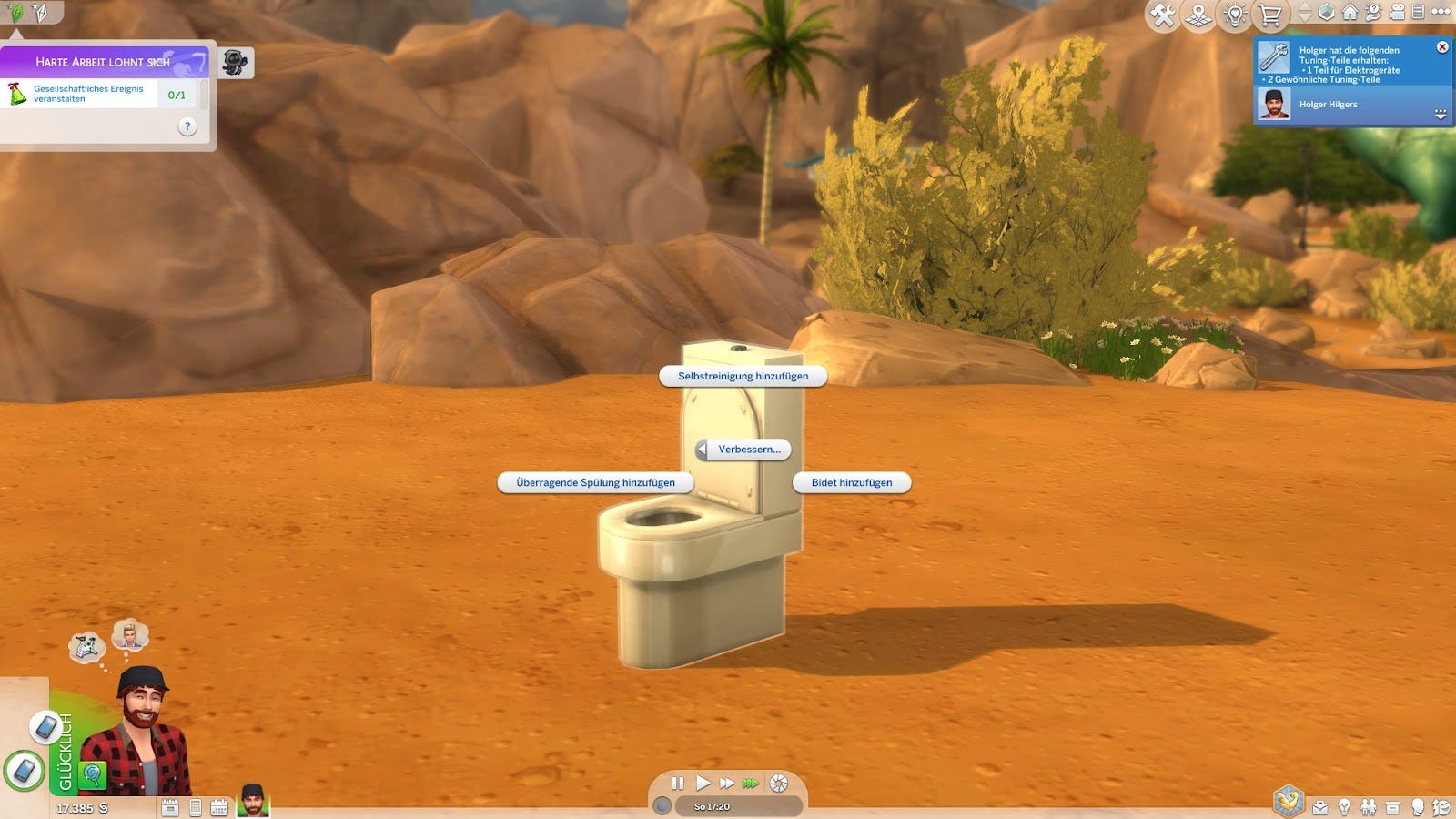
This would just be isolating one of the secondary mechanics of the game, but it’s one that can be played on its own and has enough critical thinking that I think it could be a fun homework assignment–if only the German Wiki was updated enough to include the useful information the English Wiki had :/
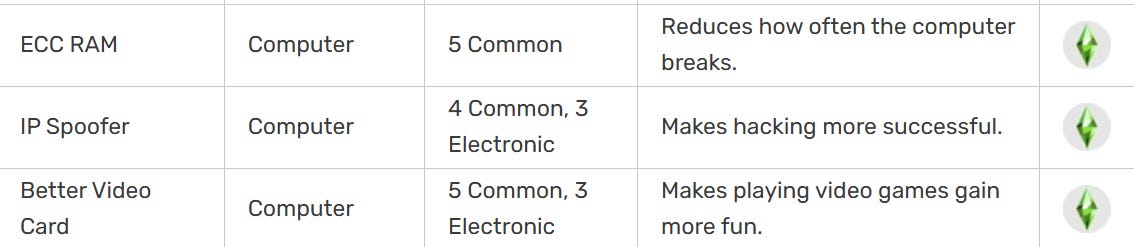
Basically, just make a list of the possible upgrades a Handy Sim can complete on any given object (pictured above and described below) and ask students to rank the ones they would choose for their object in their dream house. Example (in English), below:
Activity for educators that don’t require students to play the Sims: Family Tree-machen
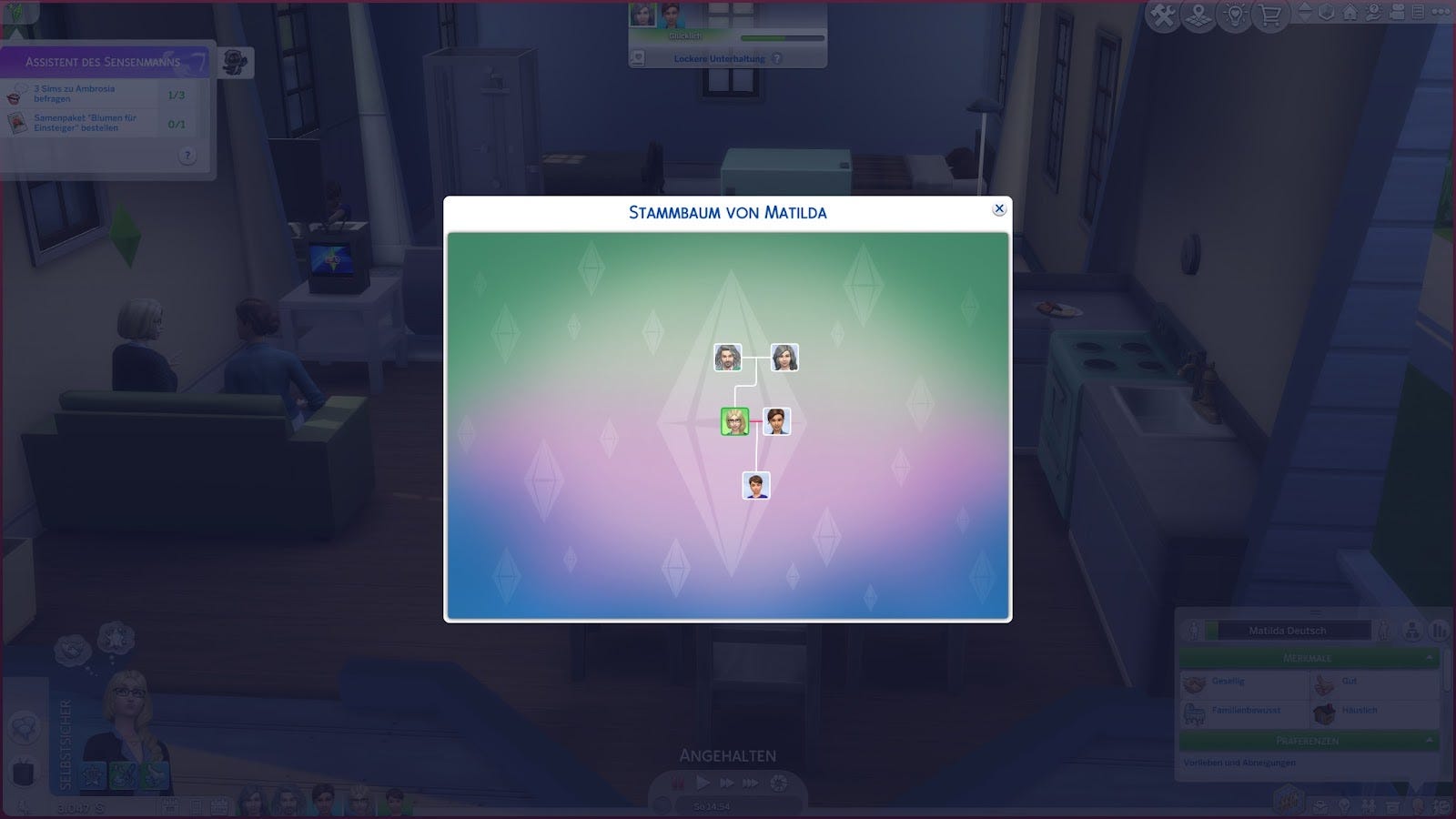
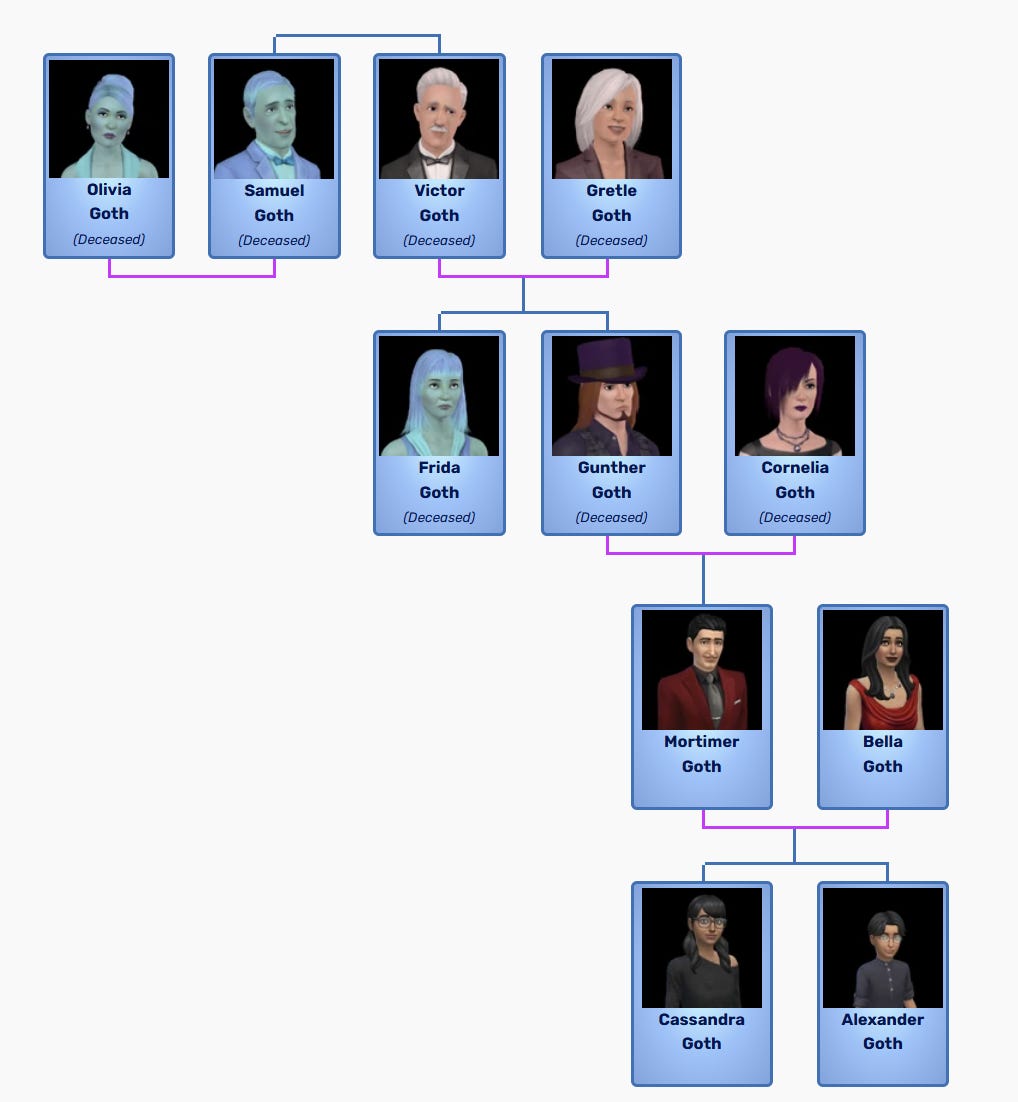
This is only a mellow recommendation, because I expected more out of the Sims in this regard, but the Sims can be used to make family trees, which have come up in every foreign language class I’ve ever taken and can be useful for teaching vocabulary about relationships. However, the family tree in the Sims is very weakly demarcated and unlabeled (if there is a way to increase the size or add labels, I didn’t see it).
Now this is because the Sims wants to encourage players to build huge dynasties, but that’s way to much work for such a limited family tree mechanic and I think I’d just recommend ripping the family trees off the Sims Wiki, like the below schematic of the Goth Family Tree:
Activity for educators that don’t require students to play the Sims: text-matching games
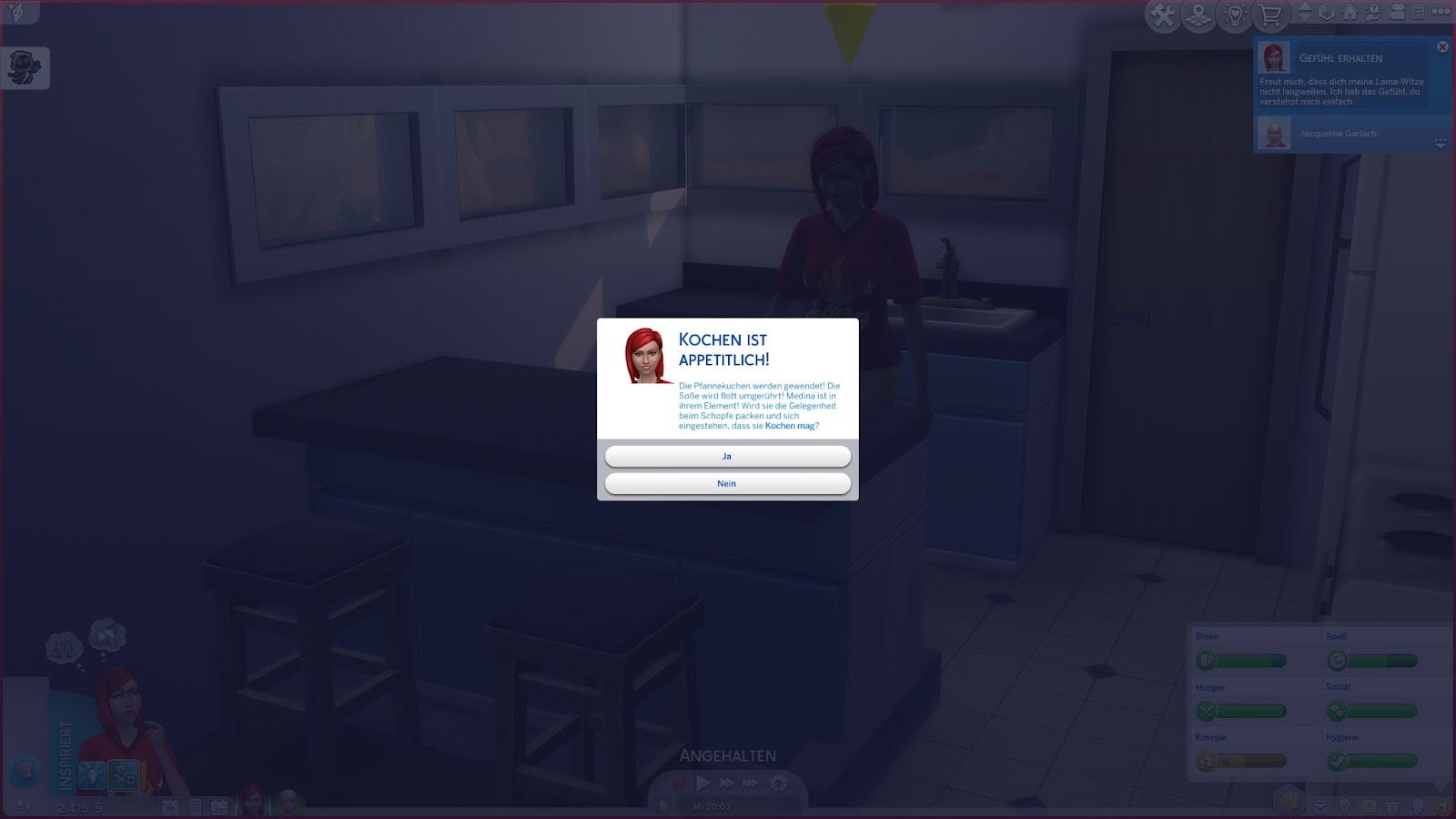
This is kind of a repeat from my Skyrim guide and I do think this would require more one-time labor in the Sims than Skyrim because the German wiki at least is not as fervently maintained as Skyrim’s wikis, but there’s so many sets of text boxes in Sims (like ability descriptions, ability level up notifications, promotion notifications, upgrade descriptions, trait descriptions, like and dislike notifications, relationship descriptors, etc…) and it could be a meaningful to make a matching game for them, especially for A2 and B2 students (maybe A1 if you keep the images).
Not going to lie, I can’t strongly recommend this because I don’t think there’s an easy way to access both the English and German text, but that’s kinda frustrating since the text is professionally-translated, world-relevant, often-funny, rated for children and teenagers and also wonderfully-limited in breadth. Like, generating educational content requires both language proficiency and a lot of decision-making and surrendering those decisions to EA could be such a time-saver.
Activity for educators that would require pupils to play Sims 4: Lockout Bingo
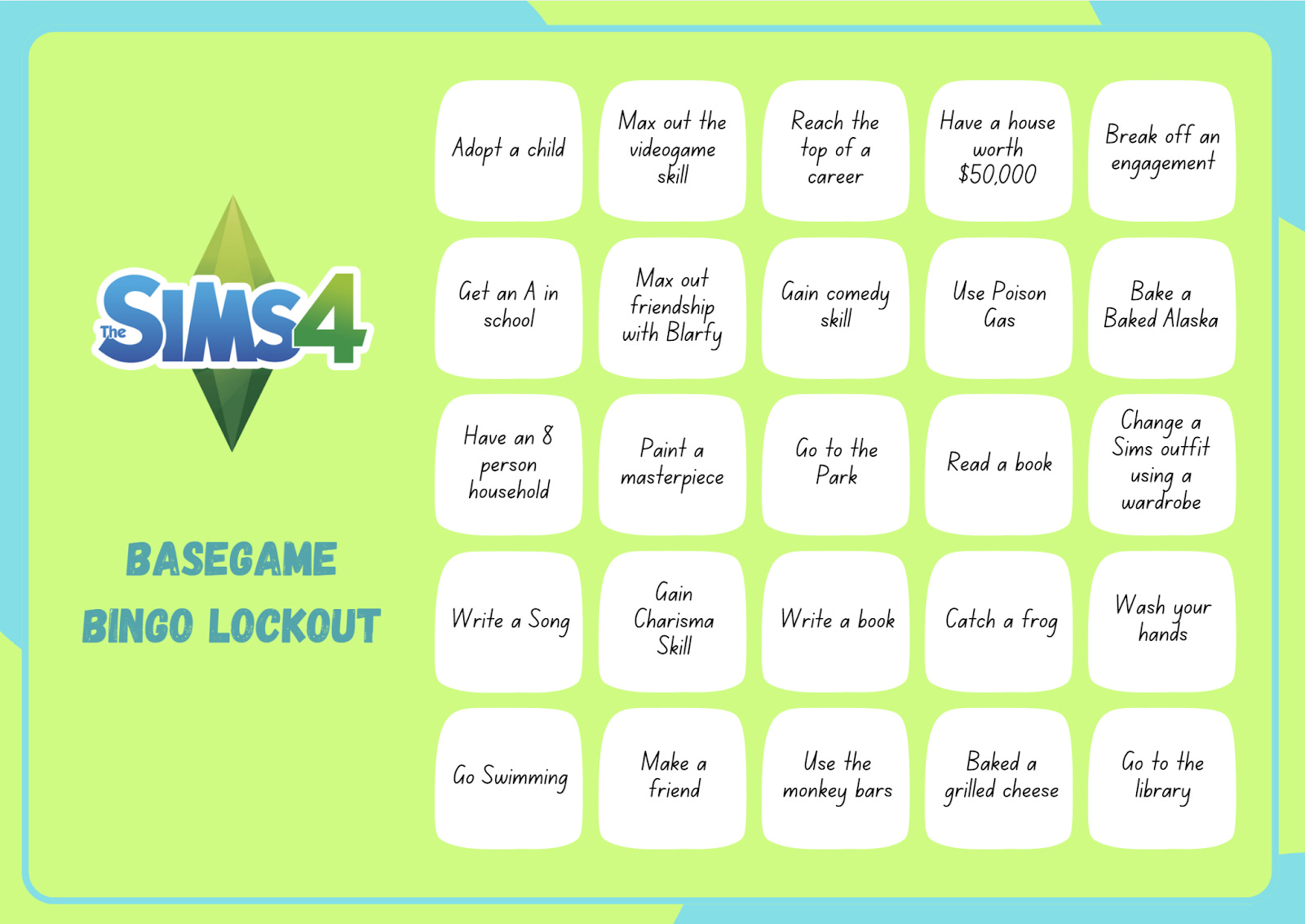
Bingo Lockouts are a streaming staple, especially for streamers in speedrunning communities, where individuals (or teams) compete to complete as many squares in a 5x5 grid of (ideally, randomly-generated) micro-achievements before their opponents do. [Despite being a bingo board, you don’t actually win if you get Bingo, unless you also get the most squares completed before the time limit].
Tragically, the streamer-friendly Bingosync does not have any Sims games pre-programmed so all Bingo boards would have to be educator-generated, but if you have the patience and knowledge to make your own boards, this could be a fun competition in a classroom setting where students had reliable access to the Sims 4. It also could be super fun for self-study, but it kinda needs a study buddy and I’m tragically without at the moment.
Activity for educators that would require pupils to play Sims 4: Sims world diary
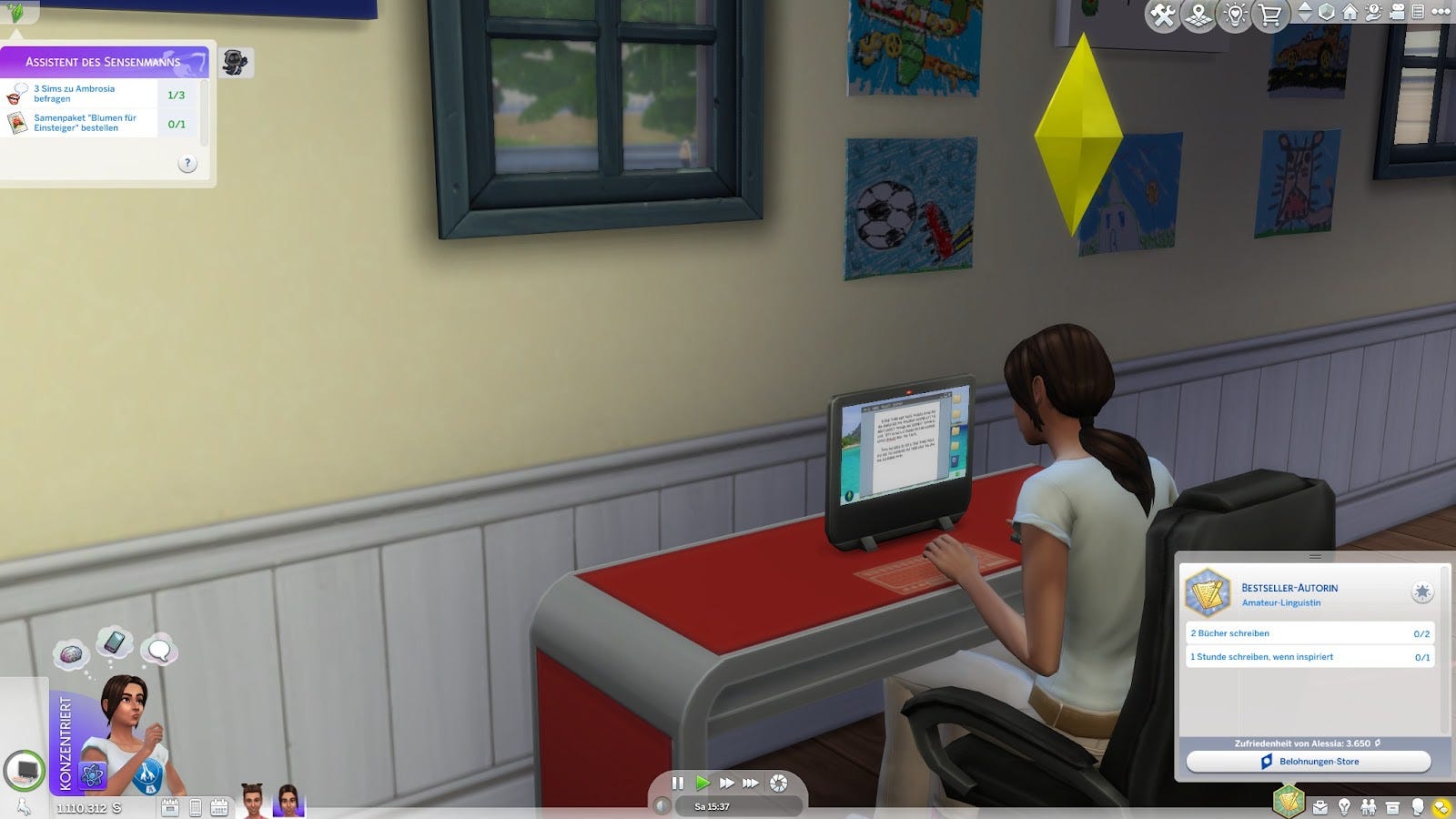
Again this is a little close to just playing the game, which again, is technically a study activity, but it could be meaningful to have students play the Sims and then write a little diary afterwards from the perspective of their Sims. Ideally a child, so then they can write with the appropriately-limited vocabulary of one.
Liebes Tagebuch,
Heute habe ich meine Sprachfähigkeiten voll ausgeschöpft und einen Baum gemalt. Ich liebe meinen Stofftierbären und meine Schwester, die eine Gangsterbossin ist. Mein jüngerer Bruder ist stinkend und meine Mutter hat jemanden geheiratet, den sie vor zwei Stunden kennengelernt hat.
Das ist alles von mir, rede später mit dir,
Tschüss
Nancy.
Also, this could easily be DIY studying, but perhaps it’s just my level of burn out, but I imagine students would enjoy this more as an assignment that they could share in a story-time, show-and-tell type setting than just a DIYer alone in their bedroom.
Anyway, I hope you enjoyed this very special special episode of Boudicca’s substack (I really should come up with a name for this blog, oops) and I’ll catch you next Monday with another game review.
Prost, liebe Leser.
Boudicca.